Home / Warehousing and Fulfilment
What Happens Inside a Cross-Dock: Moving Freight From Inbound to Outbound
Cross-docking is a practical way to keep logistics and transport moving when goods should spend minutes or hours on a facility floor, not days. In simple terms, incoming shipments are sorted and transferred directly to outbound trucks with little storage. The approach works when demand, timing, and supplier reliability line up, but it fails when they do not. This step-by-step look shows what happens inside a cross-dock, who coordinates the flow, and what is cross docking and when should a warehouse use it in real operations.
The basic idea behind a cross-dock
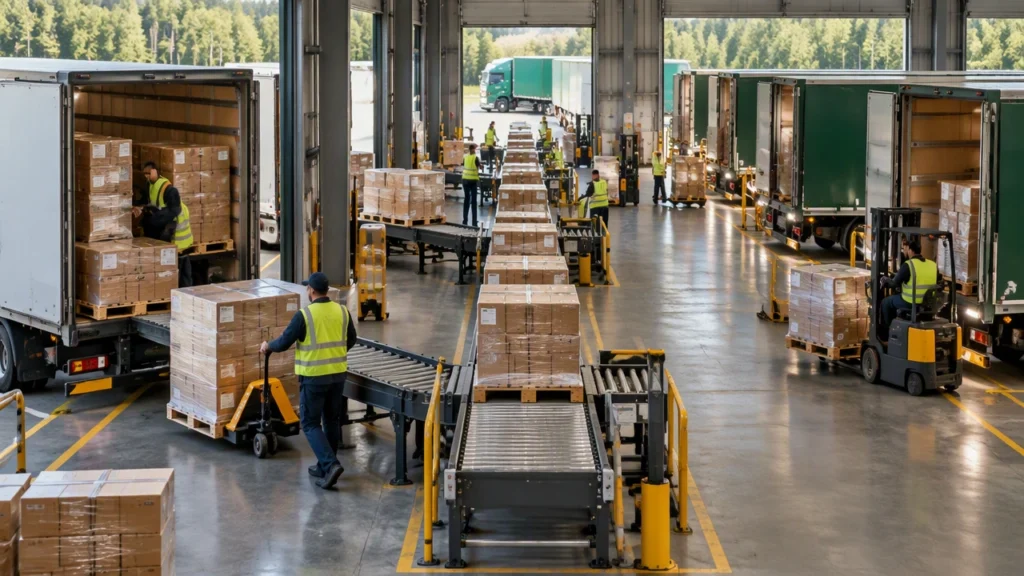
A cross-dock is a facility designed to receive goods on one side and ship them on the other with minimal handling in between. Traditional warehousing focuses on storing inventory until an order is ready. A cross-dock focuses on matching inbound supply to outbound demand as quickly as possible. Freight may be staged briefly on the dock or in a short-term lane, but the goal is to avoid putting it away into long-term storage.
The model suits predictable, high-volume flows. Retail replenishment, parcel networks, food distribution, and manufacturing line feeds often use cross-docking because products turn quickly and destinations are known in advance. The result can be lower storage cost, shorter lead times, and fewer touches between receipt and shipment.
Step 1: Plan the flow before the truck arrives
Good cross-docking starts with planning. Operations teams review expected inbound loads, carrier appointments, order requirements, and outbound departure windows. Each shipment is matched to a destination, route, or customer group. Freight that can be consolidated is grouped together, while special handling needs such as temperature control, hazmat, or oversized items are flagged early.
Transportation schedules matter as much as warehouse schedules. If an inbound truck arrives after the outbound trailer has departed, the freight may have to wait for the next route. Planners therefore align receiving appointments with outbound cut-off times and keep buffer capacity for late arrivals.
Step 2: Receive and verify the inbound load
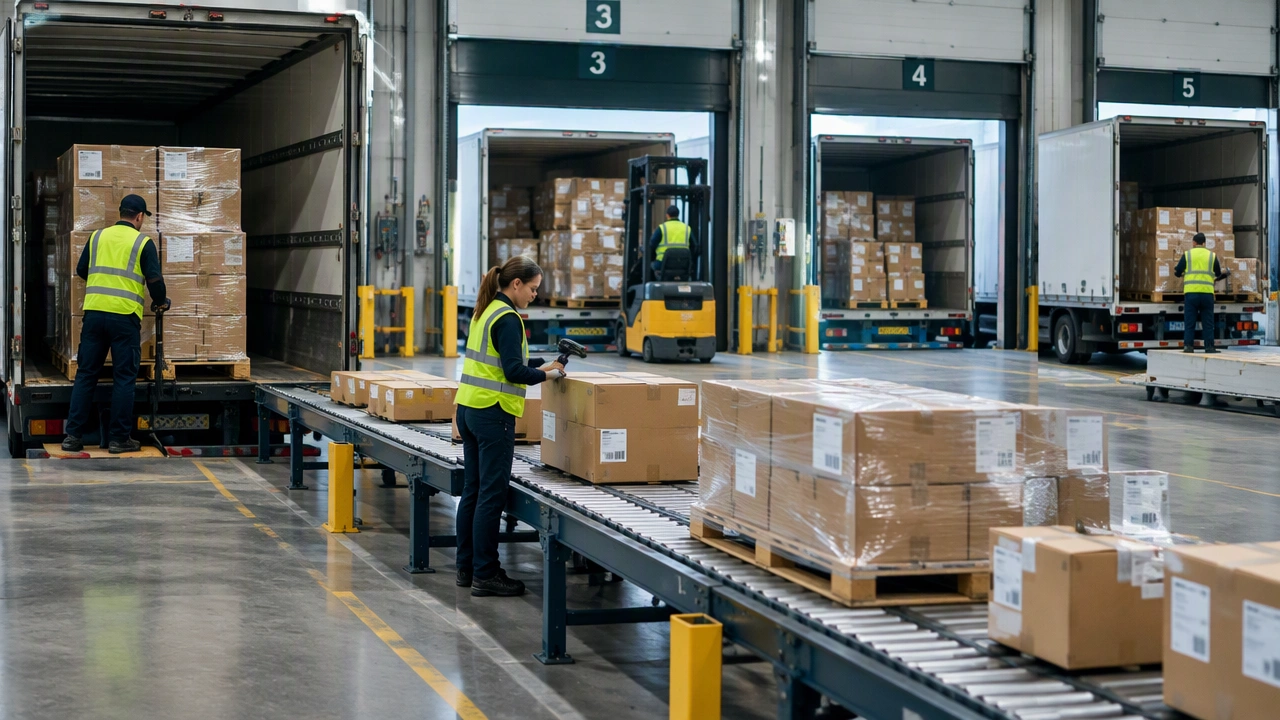
When the inbound truck arrives, the dock team checks the seal, paperwork, and shipment identifiers. Pallets or cartons are unloaded onto the receiving dock and scanned into the facility system. The scan confirms what arrived, where it came from, and where it needs to go next.
Verification catches problems early. Shortages, damaged packaging, wrong labels, or unexpected quantities can stop a load from flowing smoothly. The team may set aside exceptions for inspection while the rest of the freight continues to the outbound side. Clear exception handling keeps the main flow moving without hiding errors.
Step 3: Sort and stage for outbound
Once received, freight is sorted by outbound destination, route, customer, or product type. Some facilities use conveyor systems and scanners; others rely on forklifts, pallet jacks, and floor markings. The key is to create short, visible lanes where each group of goods can be identified quickly.
Staging is temporary. Goods may sit on the dock for minutes while the outbound trailer is positioned, or they may wait for a short consolidation window so several smaller shipments can travel together. The cross-dock avoids putting freight into racking unless a delay requires it. If a load must be held longer than planned, the team records the reason and updates the outbound schedule.
Step 4: Consolidate and load the outbound truck
Outbound loading is where the cross-dock delivers its value. Workers combine shipments going to the same destination, balance weight and cube, and load in a sequence that supports efficient delivery. Fragile or temperature-sensitive goods are placed according to handling rules. Each pallet or carton is scanned again so the shipment record is complete before departure.
Communication with the driver and transportation team is continuous. If a load is incomplete, the team can hold the trailer, split the shipment, or reassign freight to another route. The aim is to depart on time with an accurate manifest and a trailer that can be unloaded without surprises.
Step 5: Close the loop with data
After the outbound truck leaves, the operation reviews what happened. Teams compare planned and actual arrival times, dock dwell time, scan accuracy, and missed connections. These metrics reveal whether the cross-dock is balanced or whether one side of the building is consistently waiting on the other.
Data also improves future planning. If a particular supplier routinely arrives late, appointments can shift. If outbound routes fill early, additional doors or trailers can be scheduled. Small adjustments prevent small delays from becoming service failures.
When a warehouse should use cross-docking
Cross-docking is a strong choice when products are high-turn, destinations are stable, and demand can be forecast with reasonable confidence. It works well when inventory should not sit for long, such as fresh food, promotional goods, or time-sensitive components. It also helps when transportation savings are significant because freight can be consolidated before the next leg.
It is a weaker choice when demand is volatile, product quality needs long inspection, or inbound supply is unreliable. Goods with unpredictable order patterns may require storage until a clear shipment plan exists. Facilities with limited dock doors, weak scanning systems, or inconsistent carrier performance may also struggle to maintain the pace.
A simple decision test
Ask three questions. First, is the outbound destination known before the inbound load arrives? Second, can the freight be handled safely within a short dwell time? Third, will skipping storage reduce total cost without creating missed deliveries? If the answers are yes, cross-docking deserves a trial. If any answer is no, a short storage buffer may be safer.
Make the handoff visible
The best cross-docks make every handoff visible. Appointments, scans, lane assignments, and departure windows tell the team where freight should be and when. Supervisors can see bottlenecks before they grow, and drivers receive clear instructions instead of last-minute guesses.
For a warehouse considering the model, start with one stable product family or one repeat route. Measure dock dwell, on-time departures, handling touches, and damage rates. Expand only when the numbers show that the flow is controlled.
Cross-docking is not about removing process. It is about replacing unnecessary storage with disciplined timing, accurate data, and close coordination between receiving and shipping. When those pieces work together, goods move across the facility quickly and arrive at the next destination ready for the road.