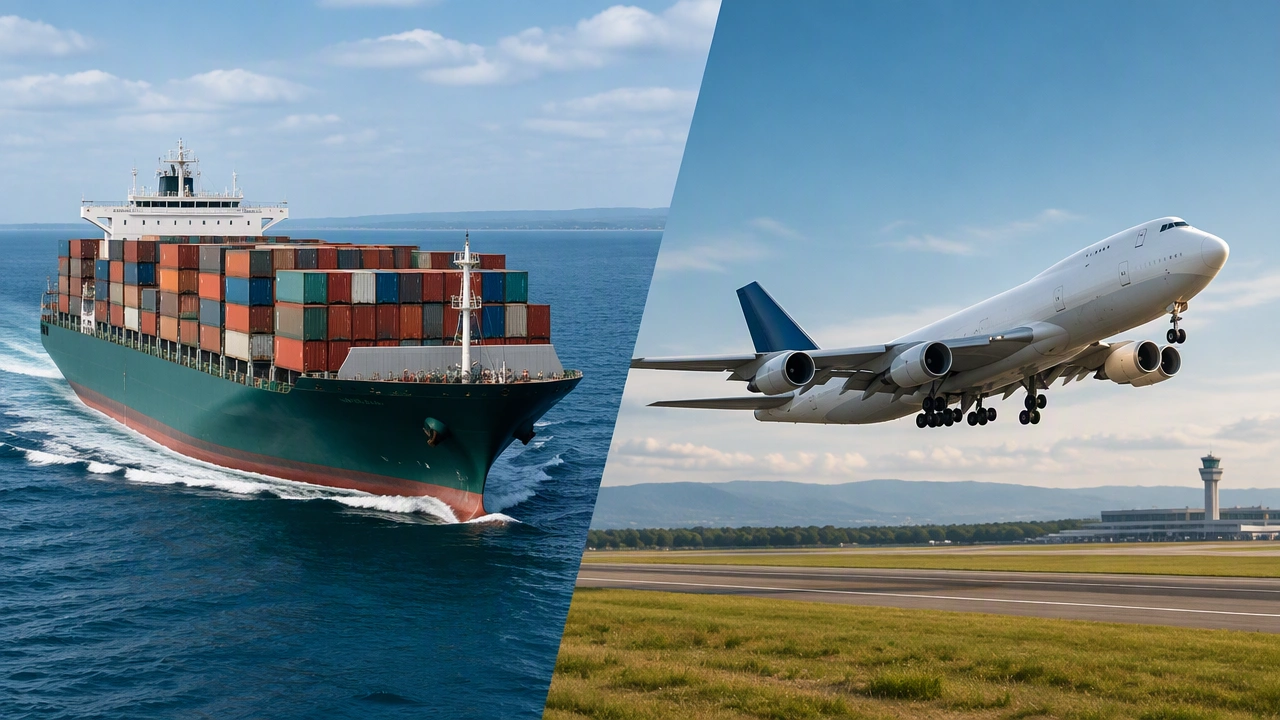
Sea freight and air freight serve different needs in global logistics. Sea freight is the backbone of international trade, handling the majority of goods by volume worldwide. It offers lower cost per unit and can accommodate oversized or heavy cargo through container and breakbulk options. Transit times are longer, typically weeks rather than days, making it suitable for non-urgent and high-volume shipments. Air freight provides speed, with transit measured in hours or days, which is critical for time-sensitive goods like pharmaceuticals, electronics, and seasonal retail products. The trade-off is higher cost and weight limitations. Air cargo also faces stricter security screening and dimensional weight pricing. When planning international shipments, consider the nature of your product, cost tolerance, delivery urgency, and customs clearance timelines. Many companies use a blended approach, routing core volume by sea and emergency stock by air to balance cost and responsiveness across the supply chain.