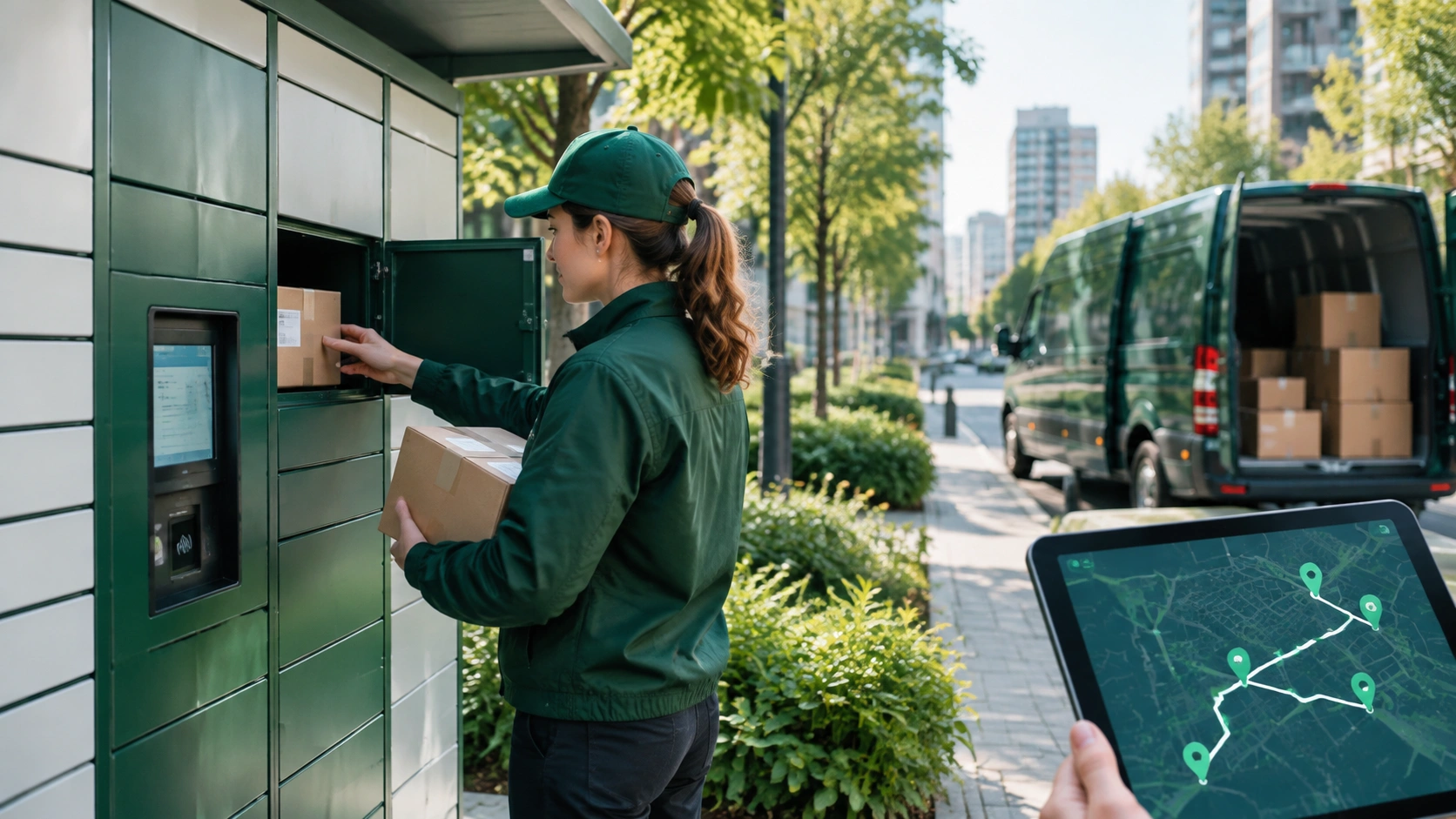
Parcel Lockers and Urban Delivery Points: Smarter City Routing
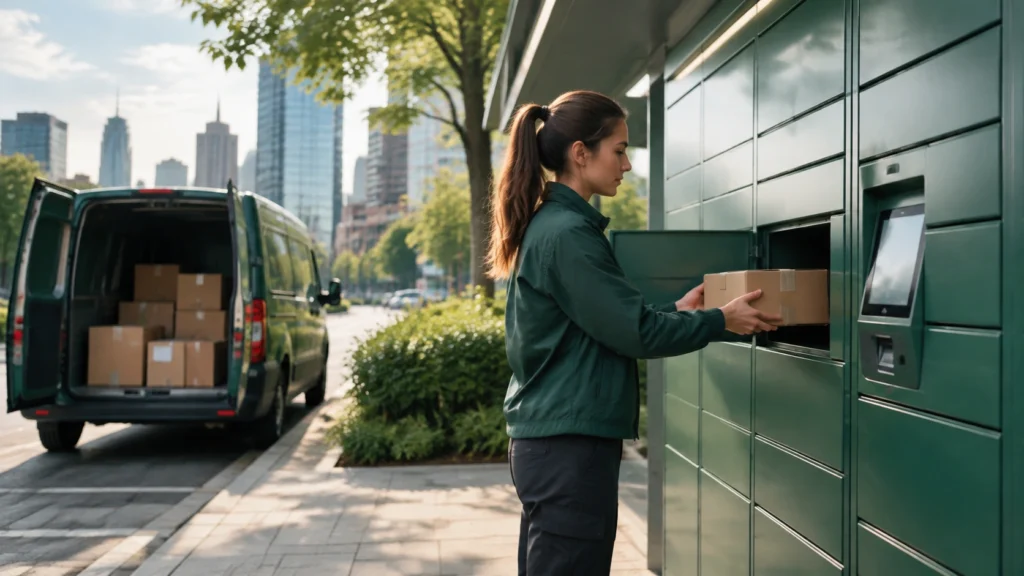
Urban logistics is being redrawn by shared collection points. These lockers, staffed pickup counters, and neighborhood hubs let several recipients collect parcels from one stop, changing how freight moves through logistics and transport networks. The shift is practical: fewer scattered addresses, more predictable routes, and delivery options that fit city life.
Why cities are moving toward collection points
Doorstep delivery remains important, but dense neighborhoods create repeated attempts, traffic friction, and tight access windows. A courier may reach a building only to find a concierge unavailable, a secure entry code rejected, or no safe place to leave a package. Each failed attempt adds distance without adding completed deliveries.
Shared collection points reduce that waste by concentrating demand. Instead of visiting dozens of separate doors, a vehicle can serve one locker bank or pickup counter that handles many orders. The model also suits apartments, offices, and mixed-use districts where residents value flexibility over a fixed time at home.
How collection points change routing
Routing becomes simpler when stops are grouped. Dispatch systems can assign a locker as a single destination, then sequence multiple lockers along corridors rather than zigzagging between individual addresses. This lowers total kilometers and makes schedules more reliable, especially during peak periods.
Collection points also improve route sequencing around time windows. A locker can accept parcels throughout the day, while a home delivery may require a narrow appointment. By separating flexible stops from constrained stops, planners can build tighter routes and reserve capacity for exceptions.
Urban geography matters. Lockers near transit stations, supermarkets, or residential entrances create natural clusters. Routes can follow these anchors, with couriers moving from one high-traffic location to the next. The result is a more stable pattern that is easier to forecast and staff.
From address-level planning to zone-level planning
Traditional last-mile planning works at the address level. Shared points shift part of the work to zone-level planning: define service areas around lockers, balance parcel volume across sites, and adjust stop frequency as demand changes. This helps carriers manage uneven density between neighborhoods.
Delivery density: doing more with each stop
Delivery density measures how many parcels are completed per stop, per hour, or per kilometer. Collection points increase all three when they are placed well. One locker stop may cover twenty or thirty parcels, while a doorstep round might complete only a handful in the same building.
Higher density lowers cost per parcel and reduces the number of vehicles needed for a given volume. It also improves the economics of off-peak delivery, because a single visit can clear many orders without waiting for individual recipients.
Density depends on utilization. A locker that is nearly full can create delays, while an underused unit wastes space and travel time. Operators therefore monitor occupancy, parcel dwell time, and turnover by hour. Good planning balances sites so couriers are not forced to return to overfilled boxes.
Capacity, access, and pickup patterns
Customer behavior shapes density too. If most recipients collect within 24 hours, lockers turn over quickly and support more deliveries per day. If parcels remain for several days, capacity shrinks and routes must adapt. Clear notifications, realistic hold periods, and accessible locations all influence how quickly space is released.
Customer convenience without fixed-time delivery
Convenience is often described as speed, but reliability and choice matter just as much. Shared points let people pick up on the way home, during a commute, or at a time that avoids missed deliveries. For apartment residents, a locker can remove the need to coordinate with a front desk or neighbor.
Collection points also support privacy and security. A parcel waiting in a monitored locker is less exposed than a box left in a hallway. Customers who travel frequently or work irregular hours gain a consistent option that does not depend on being home.
What are the benefits of parcel lockers for city deliveries
The benefits appear across operations, residents, and the wider street environment:
- Fewer failed attempts: parcels are delivered once to a secure location instead of repeated doorstep visits.
- Higher drop density: one stop can complete many orders, improving productivity per kilometer.
- Predictable routes: fixed collection points make timing and sequencing easier to plan.
- Flexible pickup: recipients collect parcels when it fits their schedule, reducing time pressure.
- Lower exposure to theft and weather: enclosed compartments protect goods and reduce damage risk.
- Better use of curb space: fewer individual stops can mean less stopping and idling in residential streets.
- Scalable capacity: operators can add compartments or relocate units as neighborhoods change.
These gains are not automatic. They depend on location quality, clear instructions, and reliable maintenance. A locker hidden from view or difficult to reach may discourage use and push volume back to home delivery.
Designing a network that works in real neighborhoods
Effective networks combine several formats. Large lockers near transit hubs handle commuter pickups, while smaller units inside residential lobbies serve daily local demand. Staffed pickup counters can accept oversized items or provide assistance when a code fails. Mixing formats keeps the system flexible.
Placement should follow actual movement patterns rather than simple population counts. Sites near grocery stores, schools, and frequent transit stops may outperform a technically central but inconvenient location. Operators also consider step-free access, lighting, and clear signage so that pickup is comfortable for older residents and people with disabilities.
Data that guides placement
Useful planning data includes parcel volume by hour, average dwell time, walking distance from nearby buildings, and the share of failed first attempts. Combining these signals helps identify where a new unit will reduce route distance and where another unit would simply divide existing demand.
Challenges worth planning for
Shared points introduce trade-offs. Some customers prefer doorstep delivery for bulky items, medical supplies, or urgent goods. Others may face long walks from a locker, especially in areas with steep streets or limited lighting. Operators should maintain home delivery options and set clear service boundaries.
There are also operational constraints. Lockers require cleaning, software updates, and quick resolution of jammed doors. Parcel sizes must match compartment availability. During holidays, demand spikes can fill sites faster than expected, requiring temporary overflow points or adjusted hold periods.
A calmer, denser last mile
Shared collection points do not replace every doorstep delivery, but they change the balance. By concentrating stops, they make routes shorter and more predictable while giving residents greater control over pickup. For city logistics teams, the practical question is not whether lockers exist, but how well they are placed, operated, and integrated with home delivery.
When routing, density, and convenience are designed together, the last mile becomes less chaotic for couriers and more dependable for the people waiting for their parcels.